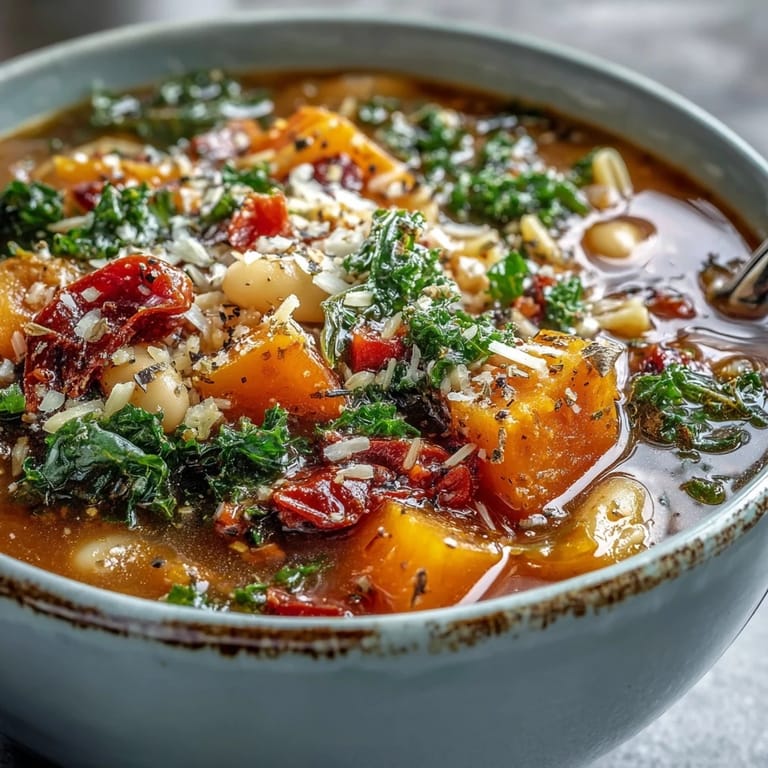
 Save on Pinterest
 There's something about the way butternut squash transforms a pot of broth into liquid gold that made me fall in love with minestrone on a particularly grey November afternoon. My neighbor had left a basket of vegetables at my door—too much to use before they'd soften—so I chopped what I had and threw together whatever herbs felt right. The result was so warming and alive that I've been chasing that feeling ever since, though now with a proper recipe to guide me.
I served this to my sister on a Sunday when she was recovering from surgery, and watching her ask for a second bowl said more than any get-well card ever could. She's not someone who gets excited about food easily, but something about the kale and the sweetness of the squash made her pause mid-spoonful and smile. That's when I knew this wasn't just soup—it was the kind of dish that does quiet healing.
Ingredients
- Olive oil: Use a quality one you actually enjoy the taste of, since you'll taste it clearly here.
- Yellow onion, carrots, and celery: This holy trinity creates the flavor foundation—don't rush the sautéing step.
- Garlic cloves: Mince them finely so they distribute evenly and don't create harsh pockets of flavor.
- Butternut squash: The star ingredient that adds natural sweetness and creaminess without any dairy.
- Zucchini: Adds lightness and a subtle earthiness that balances the squash.
- Canned diced tomatoes: Winter tomatoes in a can beat watery fresh ones every time.
- Kale: Chopped into bite-sized pieces, it wilts down more than you'd expect and becomes almost buttery.
- Cannellini beans: Drain and rinse them well to remove excess starch and prevent the soup from becoming gluey.
- Small pasta: Ditalini or elbow pasta stay suspended in broth rather than sinking like larger shapes.
- Vegetable broth: The quality matters here since it's your base—taste it first if you haven't used it before.
- Bay leaf, oregano, thyme, and rosemary: This combination smells like a Mediterranean kitchen on a cool day.
- Salt and pepper: Always taste at the very end and adjust—broth has sodium already.
Tired of Takeout? 🥡
Get 10 meals you can make faster than delivery arrives. Seriously.
One email. No spam. Unsubscribe anytime.
Instructions
- Start your flavor base:
- Heat olive oil in a large pot over medium heat and add the diced onion, carrots, and celery. You're looking for them to soften and become translucent, which takes about 5 minutes—this is where your soup's foundation gets built, so don't skip ahead.
- Wake up the garlic:
- Stir in the minced garlic and let it cook for just 1 minute until it becomes fragrant and golden. The timing here is important because garlic can turn bitter quickly if cooked too long.
- Add the sweet vegetables:
- Toss in the cubed butternut squash and diced zucchini, stirring occasionally as they cook for another 5 minutes. You'll notice the squash starting to soften at the edges and the kitchen filling with that deep autumn smell.
- Build the broth:
- Pour in the diced tomatoes, vegetable broth, bay leaf, oregano, thyme, and rosemary. Bring everything to a boil, then immediately reduce heat to a gentle simmer and cover the pot.
- Let the squash get tender:
- Simmer covered for 15 minutes until the squash is soft enough to break with a spoon but not falling apart. This is the moment to taste the broth and adjust the seasonings if needed.
- Finish with the hearty bits:
- Stir in the drained beans, pasta, and chopped kale, then simmer uncovered for 10-12 minutes until the pasta is tender and the kale has wilted into the broth. Keep an eye on it so the pasta doesn't overcook—you want it soft but still with a tiny bit of resistance.
- Final touches:
- Remove the bay leaf, taste the soup once more, and adjust salt and pepper until it tastes like comfort in a bowl. Ladle into deep bowls and finish with Parmesan, fresh parsley, and crusty bread on the side.
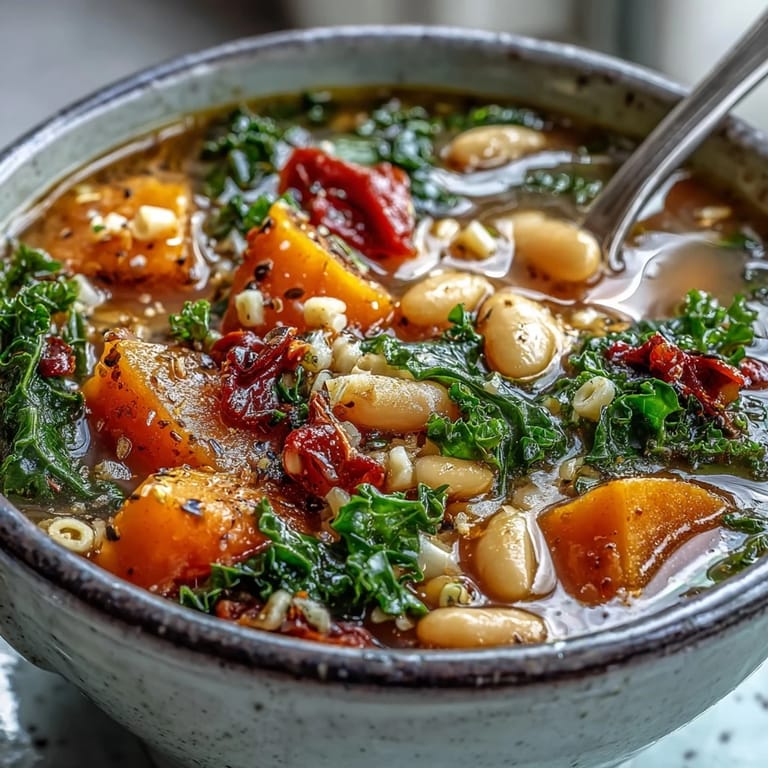 Save on Pinterest
 There's a moment near the end of cooking when someone walks into your kitchen and stops because of the smell, and that's when you know you've made something worth making. This soup has that effect—it fills a house with warmth even before anyone takes a bite.
Swapping Vegetables by Season
Winter is prime time for butternut squash and kale, but I've made this soup with spring peas and spinach, summer zucchini and tomatoes, and fall root vegetables like parsnips. The beauty of minestrone is that it's forgiving—as long as you keep the ratio of vegetables to broth roughly balanced and remember to add sturdy vegetables first (like squash) and tender ones near the end (like leafy greens), you'll end up with something delicious. The herbs might shift slightly with the seasons too—fresh basil in summer, more thyme in winter—but the core technique stays the same.
Making It Gluten-Free and Dairy-Free
If gluten is a concern, swap the regular pasta for a gluten-free version, or skip it entirely and add an extra half-can of beans for heartiness. For dairy-free, simply omit the Parmesan or use a plant-based alternative if you want that finishing flourish. I've also discovered that a squeeze of fresh lemon juice at the end adds brightness without relying on cheese, and it makes the soup feel fresher.
Storage and Reheating Tips
This soup keeps beautifully in the refrigerator for up to 4 days, and it actually tastes better the next day when the flavors have melded together. You can also freeze it (minus the pasta, which gets mushy) and add fresh pasta when you reheat it. Reheat gently over medium heat, thinning with a splash of broth if it's become too thick, and taste once more before serving because salt flavors can change after storing.
- Store in glass containers so you can see how full they are and reheat more easily.
- Add fresh garnishes like parsley and Parmesan only to your serving bowl, not to the whole batch.
- If you're freezing, leave a bit of headspace at the top since the soup expands slightly.
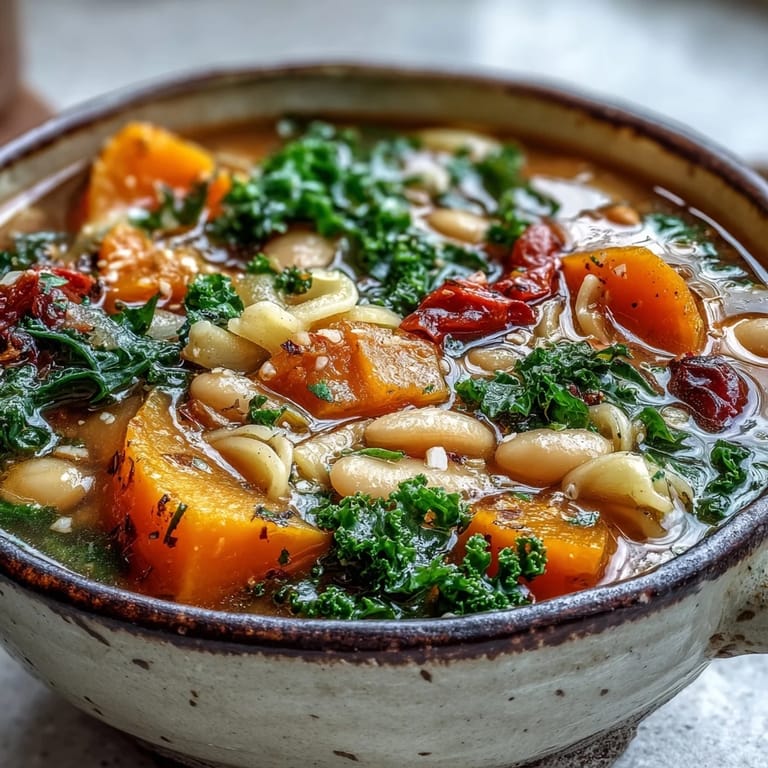 Save on Pinterest
 Make this soup on a day when you need reminding that simple food done with care is all you really need. It's the kind of dish that earns a place in your regular rotation not because it's fancy, but because it feels like home.
Recipe FAQs
- → Can I make this minestrone ahead of time?
Yes, this soup stores beautifully. Prepare it up to 3 days in advance and refrigerate in an airtight container. The pasta will absorb liquid as it sits, so add extra broth when reheating. For best results, cook the pasta separately and add it just before serving.
- → What can I substitute for butternut squash?
Sweet potato, acorn squash, or pumpkin work wonderfully as alternatives. You can also use regular potatoes or increase the amount of zucchini and carrots for a different vegetable profile while maintaining the hearty texture.
- → How do I make this soup heartier?
Add more beans, increase the pasta quantity, or include additional vegetables like green beans or potatoes. You can also stir in a handful of spinach along with the kale, or serve with thick slices of crusty bread topped with olive oil and garlic.
- → Can I freeze winter minestrone?
Absolutely. Freeze the soup without the pasta for up to 3 months. The pasta can become mushy when frozen and thawed. Instead, cook fresh pasta and add it when you reheat the soup. Thaw overnight in the refrigerator before warming on the stovetop.
- → What herbs work best in minestrone?
Traditional Italian herbs like oregano, thyme, rosemary, and basil are ideal. Fresh herbs can be added at the end of cooking for brighter flavor. A bay leaf adds depth during simmering, and fresh parsley makes an excellent garnish that adds color and freshness.
- → How can I add more protein to this soup?
While cannellini beans provide plant-based protein, you can add chickpeas, lentils, or white beans. For non-vegetarian options, Italian sausage or diced chicken work well. Cook the meat separately and add it during the final simmering stage.