 Save on Pinterest
 There's something about the smell of cornmeal hitting hot oil that instantly transports me back to county fair afternoons, though my first attempt at homemade corn dogs happened in my tiny apartment kitchen on a random Tuesday when I was craving that fairground magic without leaving home. My roommate walked in mid-fry, bewildered by the golden chaos unfolding on the stovetop, and within minutes we were both dunking sticks into glasses of batter like we'd invented the thing ourselves. That moment of discovery—realizing you could actually make these without a carnival ticket—changed how I thought about simple fried foods. Now I make them whenever I want to feel that same childlike excitement, except with better control over the oil temperature and far fewer regrets about my clothes.
I made these for a spontaneous backyard gathering last summer, and watching adults genuinely light up when I handed them corn dogs on sticks—like they'd been transported back to their own childhood—was worth every splash of hot oil on my forearms. One friend admitted she hadn't had one since she was seven, and the nostalgia hit her so hard she went back for thirds. That's when I realized corn dogs aren't just food; they're a portal to simpler times, and homemade ones taste even better because they carry the story of making them yourself.
Ingredients
- Hot dogs: Use whatever brand you trust—they're the star here, so don't overthink it, but make sure they're as fresh as possible since that juiciness matters when they cook.
- Yellow cornmeal: This is what gives corn dogs their signature crunch and subtle sweetness; if you use fine cornmeal instead of medium, your batter will be smoother but slightly less textured.
- All-purpose flour: Keeps the batter cohesive and helps it adhere to the hot dog while frying.
- Granulated sugar: Just enough to complement the cornmeal's natural sweetness without making these taste like dessert.
- Baking powder: Creates tiny air pockets in the batter, giving it that delicate, crispy-on-the-outside texture.
- Salt: Brings out all the flavors; don't skip it.
- Whole milk: Adds richness to the batter; you can substitute with buttermilk for a slightly tangy edge.
- Eggs: Bind everything together and help the batter set up beautifully when it hits the oil.
- Vegetable oil for frying: You need enough to fully submerge the corn dogs, and keeping it at exactly the right temperature is non-negotiable if you want golden results.
Tired of Takeout? 🥡
Get 10 meals you can make faster than delivery arrives. Seriously.
One email. No spam. Unsubscribe anytime.
Instructions
- Prepare your hot dogs:
- Pat them dry with paper towels—any moisture on the surface will cause the batter to slip around and splatter instead of clinging. Push a wooden stick about three-quarters of the way into each one, angling it slightly so you have a comfortable handle and the stick doesn't poke through the other side.
- Get the oil to temperature:
- Heat your oil slowly and use a thermometer if you have one; 180°C (350°F) is the sweet spot where the cornmeal coating crisps up without burning before the inside cooks through. This is worth waiting for rather than rushing.
- Mix the dry ingredients:
- Whisk cornmeal, flour, sugar, baking powder, and salt together in a large bowl until you don't see any lumps. This step prevents clumpy batter, which ruins the smooth coating you're after.
- Create the wet mixture:
- In a separate bowl, beat the milk, eggs, and vegetable oil together until everything's combined and slightly frothy. The frothiness helps incorporate air, which makes the batter puff up beautifully when it fries.
- Combine into batter:
- Pour the wet ingredients into the dry ingredients and whisk gently until you have a thick, smooth batter with no flour streaks. It should coat a spoon like pancake batter, not drip like milk.
- Set up your dipping station:
- Pour the batter into a tall glass that's wide enough to fit your stick-wrapped hot dog; this makes the whole dipping motion intuitive and keeps batter splashing to a minimum.
- Dip with confidence:
- Submerge each hot dog completely, rotating it slowly so the batter wraps evenly around every side, then lift it out and let excess batter drip back into the glass for a few seconds. A thin, even coat crisps better than a thick one.
- Fry carefully:
- Lower the corn dogs into the hot oil gently, keeping them a few inches apart so they don't stick together. Fry 2–3 at a time for 3–4 minutes, turning them halfway through so they brown evenly on all sides and develop that crackling golden exterior.
- Drain and rest:
- Use tongs to remove each corn dog and place it on a paper towel-lined plate; the towels absorb excess oil and let the coating stay crispy instead of getting soggy. Let them cool for just a minute before serving so you don't burn your mouth.
 Save on Pinterest
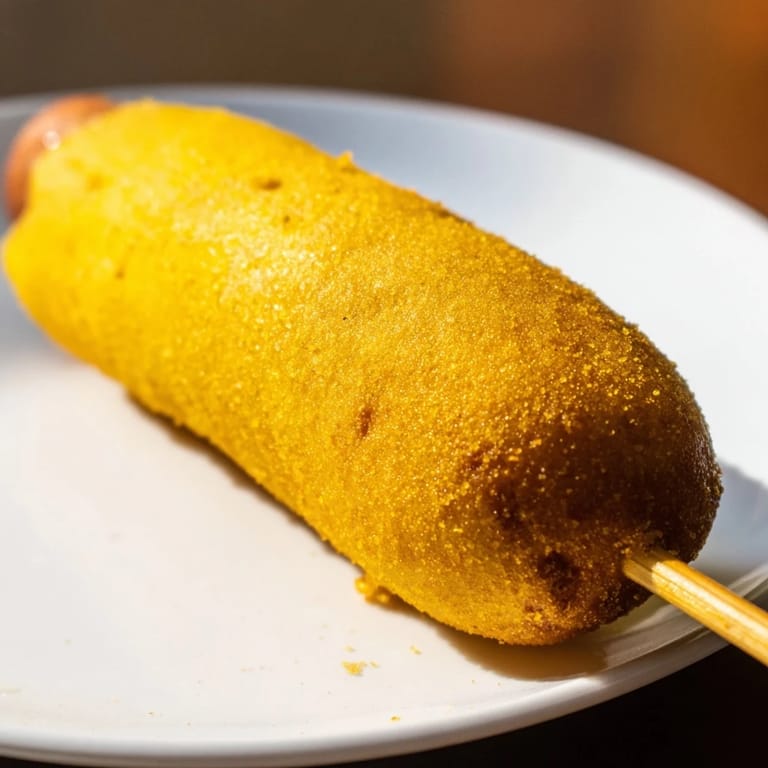
 There's a particular magic in biting through that shatteringly crisp cornmeal shell and hitting the juicy hot dog inside—it's pure comfort in its simplest form, the kind of food that makes you close your eyes for just a second. When homemade corn dogs are done right, they remind you why some foods stick around for decades; they're not complicated, they're just genuinely delicious.
Getting the Batter Just Right
The consistency of your batter makes or breaks these, and I've learned this the hard way after a few batches where the coating either peeled off or refused to crisp. The batter should be thick enough to cling to the hot dog but thin enough to flow slowly off a spoon—think soft-serve ice cream consistency rather than pancake batter. If you've mixed it and it seems too thick, add milk one tablespoon at a time until you hit that sweet spot, because a slightly thinner batter actually crisps up better than a gluey one. Room temperature batter works best; cold batter seizes up when it hits hot oil and doesn't coat as smoothly.
Oil Temperature and Safety
This is where patience genuinely matters, and I learned it after my second batch when I got impatient and lowered corn dogs into barely-hot oil only to fish out grease-logged disasters. Use a thermometer if you own one—180°C (350°F) is the target, and even 5 degrees makes a visible difference in how the coating browns. Never leave oil unattended while it's heating, keep a lid nearby in case of emergency, and always lower corn dogs in gently rather than dropping them so splashing doesn't burn you. If you don't have a thermometer, the old trick of dropping a tiny piece of batter into the oil works; it should sizzle immediately and rise to the surface within seconds.
Serving and Variations
Serve corn dogs within minutes of frying, ideally while that contrast between crispy shell and steaming interior is still alive and crackling between your teeth. Classic yellow mustard and ketchup are the obvious choices, but I've discovered that they're equally brilliant with relish, hot sauce, or even a squeeze of lime juice for brightness. You can absolutely swap in turkey dogs or veggie franks if that's your preference, though the frying time might shift slightly depending on their thickness.
- For extra crunch, mix in an additional tablespoon of cornmeal to the dry ingredients, though this makes the batter slightly thicker.
- If you want a hint of spice without overpowering the dish, add a quarter teaspoon of cayenne to the dry ingredients.
- Make your own condiment station when serving; people love customizing these with their favorite combinations.
 Save on Pinterest
 There's something genuinely satisfying about making corn dogs at home, knowing you controlled every ingredient and temperature that went into them, and that's worth far more than any carnival trip. Once you master this simple technique, you'll find yourself making them far more often than you expected, and everyone around you will quietly wonder why they never tried homemade until now.
Recipe FAQs
- → How do I get a crispy coating on the hot dogs?
Use fresh oil heated to 180°C (350°F) and fry in small batches to maintain temperature for a crispy, golden crust.
- → Can I substitute different types of hot dogs?
Yes, turkey or veggie dogs work well and adapt nicely to the cornmeal batter for varied dietary preferences.
- → What makes the batter slightly sweet?
The addition of granulated sugar balances the cornmeal’s grainy texture and enhances browning during frying.
- → How should I serve these hot dogs for best flavor?
Serve warm with classic condiments like mustard, ketchup, or relish to complement the crispy batter and juicy interior.
- → Is it necessary to dry the hot dogs before dipping?
Patting hot dogs dry helps the batter adhere better, ensuring an even coating and crisp finish.