 Save on Pinterest
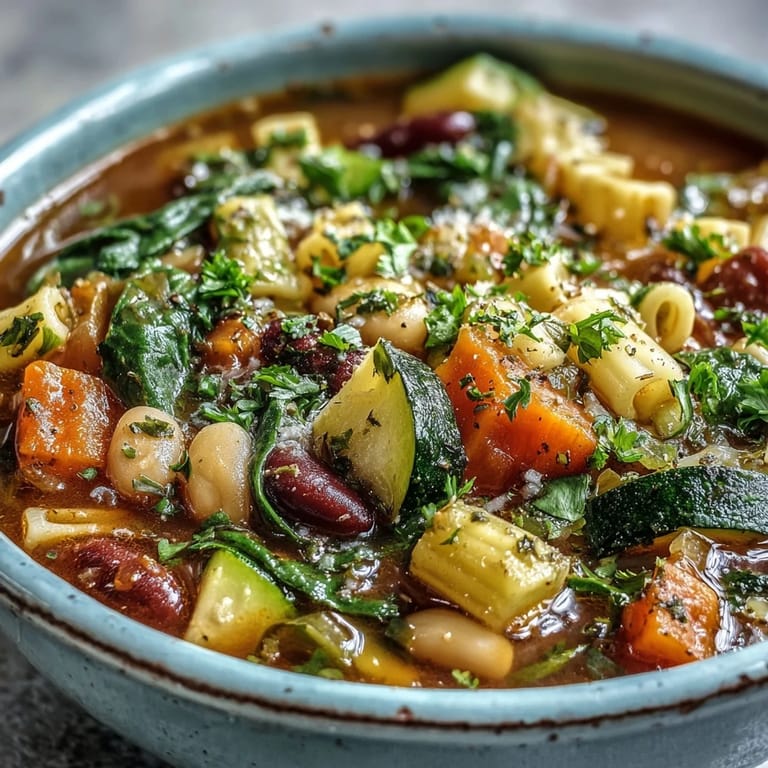
 My nonna used to make minestrone on the coldest days, filling the kitchen with steam and the smell of tomatoes simmering with herbs. I'd watch her chop vegetables with this casual rhythm, never measuring anything, just knowing. Years later, I tried to recreate that exact bowl and realized the magic wasn't in perfection but in the simple honesty of vegetables, beans, and broth coming together. This is my version of that soup, the one that tastes like being taken care of.
I made this for a friend who'd just moved into a studio apartment with nothing but a hot plate and hope. She called me three days later saying she'd made it twice, that it was the first meal that made her new place feel like home. That's when I understood minestrone isn't really a recipe, it's permission to feed yourself well without overthinking it.
Ingredients
- Olive oil: Use good quality, not the cheap stuff that tastes like regret, because you can taste it in every spoonful.
- Onion, celery, and carrots: These three create the flavor foundation, and yes, they matter enough to dice properly instead of roughly chop.
- Garlic: Mince it fresh and add it when the other vegetables have softened, or it'll turn bitter and ruin the whole mood.
- Zucchini and green beans: Pick ones that feel firm, not rubbery, because they contribute texture as much as flavor.
- Baby spinach or kale: Either works, though kale holds its shape better if you're planning leftovers.
- Diced tomatoes: Canned is fine, actually better than fresh here because the acidity balances everything.
- Vegetable broth: This is worth buying good broth, not bouillon cubes that taste vaguely metallic.
- Tomato paste: A small can or tube concentrates the tomato flavor into something deeper and more intentional.
- Small pasta: Ditalini is traditional, but elbow macaroni works and sometimes that's what you have.
- Cannellini or kidney beans: Rinse them well to remove the starchy liquid that can make the broth cloudy.
- Dried oregano, basil, and thyme: These three dried herbs are minestrone's signature, so don't skip them for fresh unless you're completely out.
- Bay leaf: Adds a subtle green note, and you have to remember to fish it out at the end or it's awkward.
- Fresh parsley: Saves the soup from tasting flat and adds color that matters more than you'd think.
Tired of Takeout? 🥡
Get 10 meals you can make faster than delivery arrives. Seriously.
One email. No spam. Unsubscribe anytime.
Instructions
- Build your flavor base:
- Heat olive oil in a large pot over medium heat and let it shimmer. Add diced onion, celery, and carrots, stirring occasionally for about five minutes until the onion turns translucent and the whole kitchen smells like the beginning of something good.
- Welcome the delicate vegetables:
- Stir in minced garlic, diced zucchini, and green beans, cooking for three to four minutes until the garlic becomes fragrant. Don't let it brown or it'll taste sharp and burnt.
- Create the tomato foundation:
- Add diced tomatoes, tomato paste, vegetable broth, and all your dried herbs plus the bay leaf. Bring everything to a boil, then lower the heat and let it simmer for fifteen minutes, which gives the flavors time to get to know each other.
- Add the texture:
- Stir in pasta and drained beans and let them cook for about ten minutes. You want the pasta soft but still with a slight bite, not mushy and surrendered.
- Finish with green:
- Add spinach or kale and fresh parsley and simmer for two to three minutes until the greens wilt and turn a darker shade of themselves. This is when the soup goes from good to alive.
- Final adjustments:
- Fish out that bay leaf, then taste and season with salt and pepper until it makes you happy. Trust your instincts here.
 Save on Pinterest
  Save on Pinterest
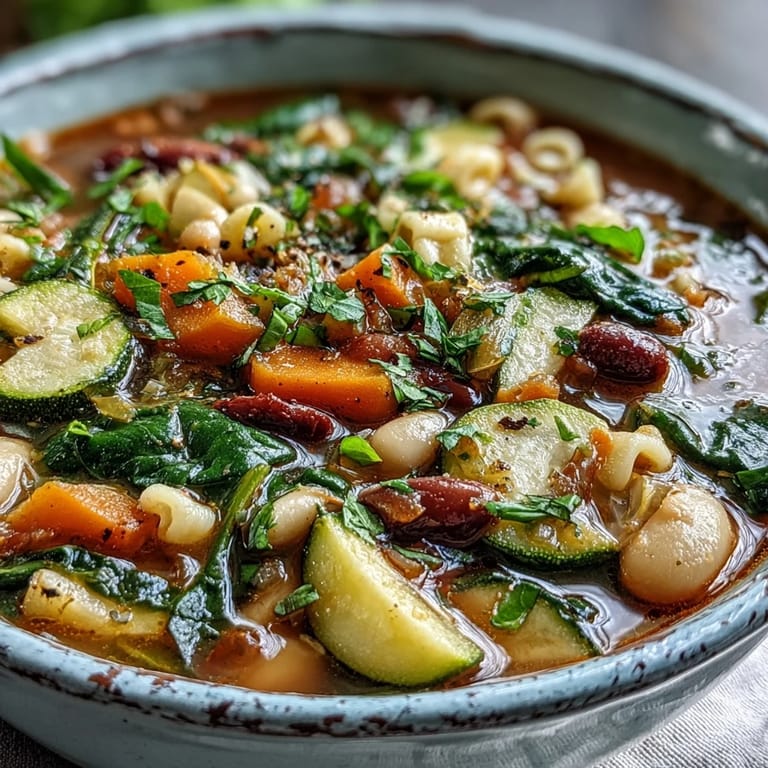
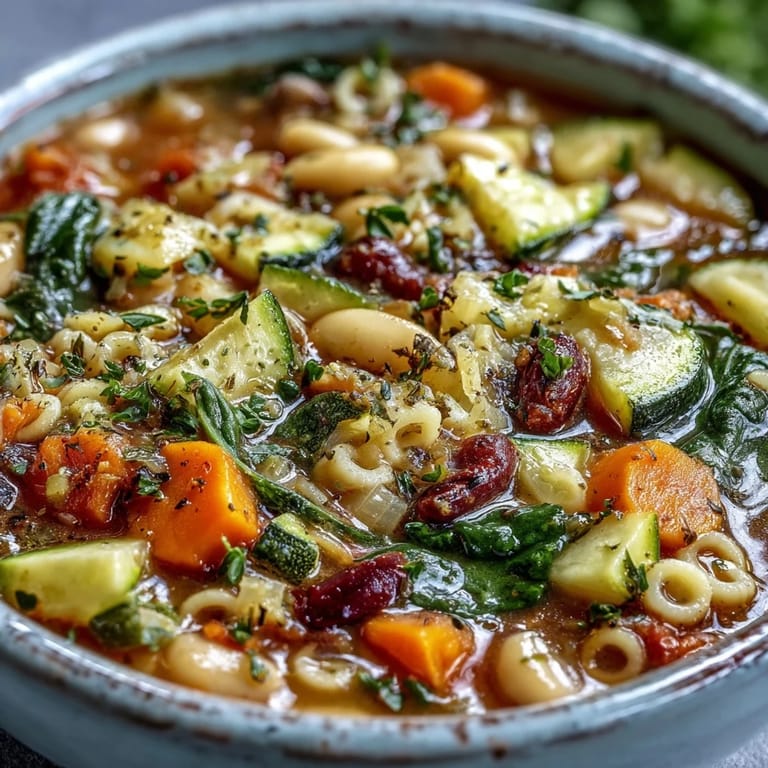
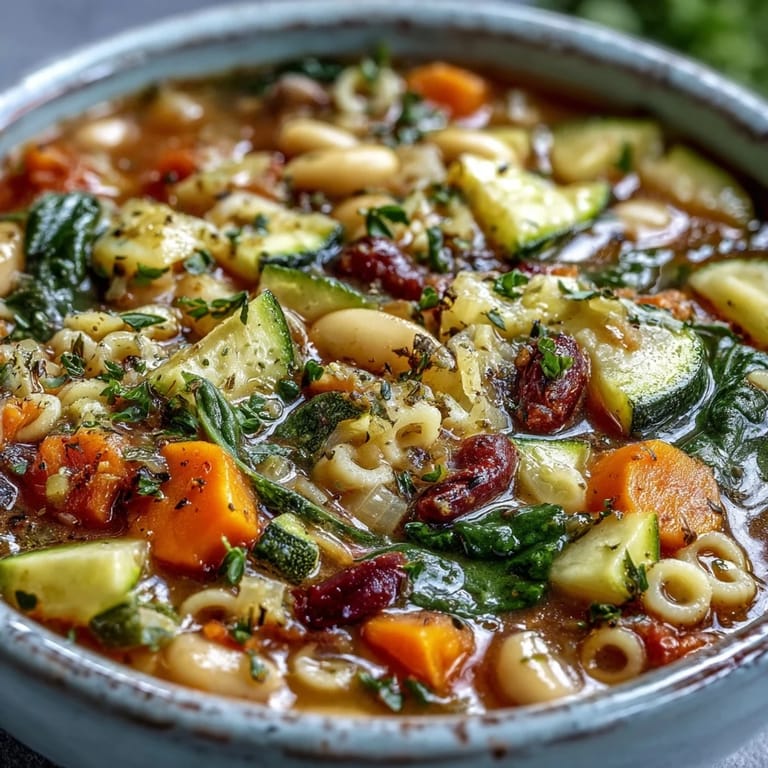
 There's something about ladling minestrone into a bowl that makes even a Tuesday night feel ceremonial. My neighbor brought me some when I was sick, and I remember thinking that food made with care tastes different, not just better but actually different, like you can sense the attention in every spoonful.
When to Make This Soup
Minestrone is the kind of soup that works year-round but shines in transitional seasons when you can't decide what you want. Spring brings fresh vegetables that haven't been stored all winter, and winter is when you want something warming and substantial. Summer minestrone tastes lighter if you use young zucchini and fresh beans, while fall is when you add extra kale and let the broth get darker and deeper.
Making It Your Own
This recipe is forgiving in the way that the best soups are. Swap in whatever vegetables are in your crisper drawer, add more or less pasta depending on whether you want broth or a hearty stew. Some people add a Parmesan rind while it simmers, others stir in white beans instead of cannellini, a few brave souls have added tiny tortellini instead of ditalini and created something entirely new.
Serving and Storage
Serve this soup hot in deep bowls with crusty bread you don't mind dipping and soaking. It tastes even better the next day after the flavors have settled and become more themselves, and it freezes beautifully for up to three months if you undercook the pasta slightly since it'll continue softening in storage. If you're serving it to people you love, sprinkle extra fresh parsley on top because the green makes it look like you care, which you do.
- Grate fresh Parmesan on top if you're not vegetarian strict, and yes it matters.
- Add extra broth when reheating because pasta and beans keep absorbing liquid even in the fridge.
- A splash of good olive oil drizzled on top at the end transforms it from good to something people ask you to make again.
 Save on Pinterest
  Save on Pinterest
 Minestrone is proof that simple ingredients treated with attention become something worth remembering. Make this when you need to feel like things are going to be okay.
Recipe FAQs
- → Can I use different vegetables in minestrone?
Absolutely! Minestrone is highly adaptable. Try adding cabbage, potatoes, butternut squash, or bell peppers based on what's in season or available in your kitchen.
- → What type of pasta works best?
Small pasta shapes like ditalini, elbow macaroni, or small shells work perfectly. They cook evenly and are easy to spoon up with the vegetables and broth.
- → How do I make this soup vegan?
This minestrone is naturally vegetarian. To make it vegan, simply omit any Parmesan garnish and ensure your vegetable broth doesn't contain animal products.
- → Can I prepare minestrone ahead of time?
Yes! This soup tastes even better the next day. Store in the refrigerator for up to 4 days. The pasta may absorb liquid, so add extra broth when reheating.
- → How can I make this gluten-free?
Simply substitute regular pasta with your favorite gluten-free variety. Ensure your vegetable broth is also certified gluten-free.
- → What can I serve with minestrone?
Crusty Italian bread, garlic bread, or focaccia are traditional accompaniments. A simple green salad with vinaigrette also pairs beautifully.