 Save on Pinterest
 My neighbor Maria taught me that minestrone isn't about following rules but about using what's in your garden or market that day. One autumn afternoon, she handed me a colander of just-picked zucchini and tomatoes, refusing to let me apologize for the imperfect vegetables. That soup became my favorite kitchen lesson: the soul of minestrone lives in its flexibility, not perfection. Now when I make it, I'm really making it her way.
I made this for my daughter's first week of university, sending her off with containers that lasted four days in her dorm fridge. She texted that her roommate was jealous, and somehow that simple message meant more than any compliment. Minestrone became our language across distance that semester.
Ingredients
- Olive oil: Use a generous two tablespoons because this is where the soup's foundation lives, infusing every vegetable with warmth.
- Onion, carrots, and celery: This holy trinity creates the aromatic base; don't rush or skip this step even if you're hungry.
- Garlic: Mince it fine so it disappears into the broth and makes you wonder where that sweet fragrance is coming from.
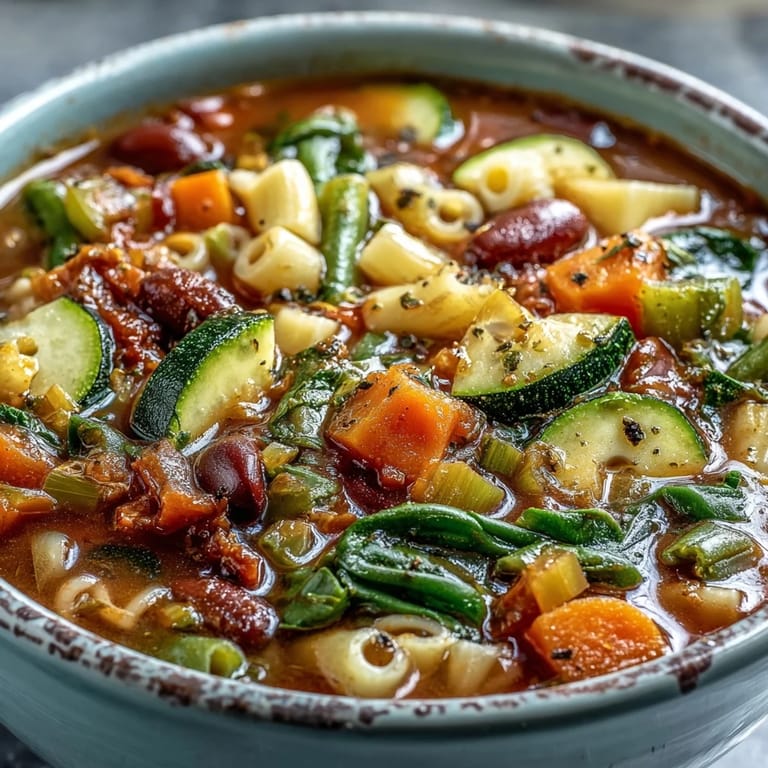
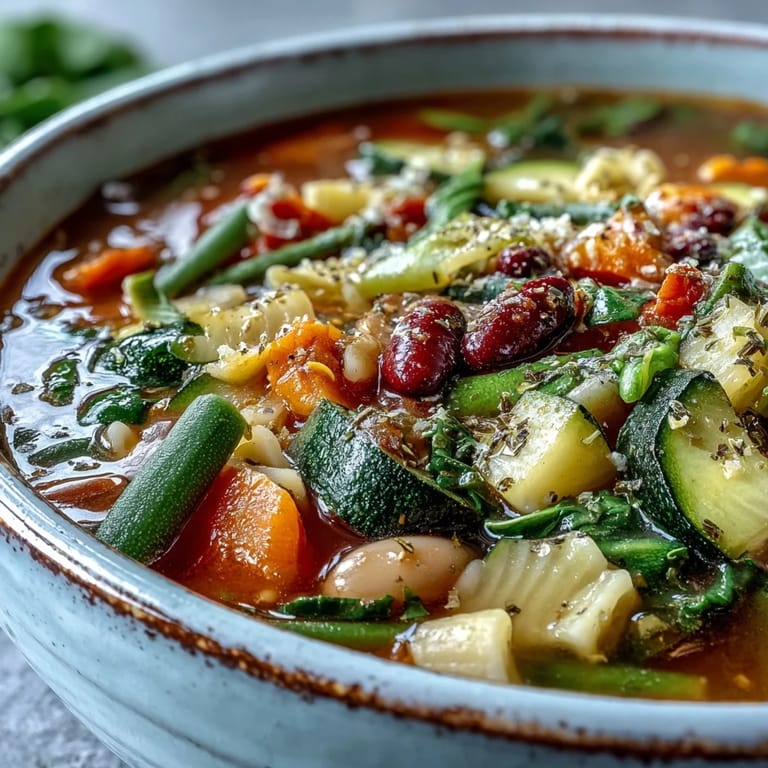
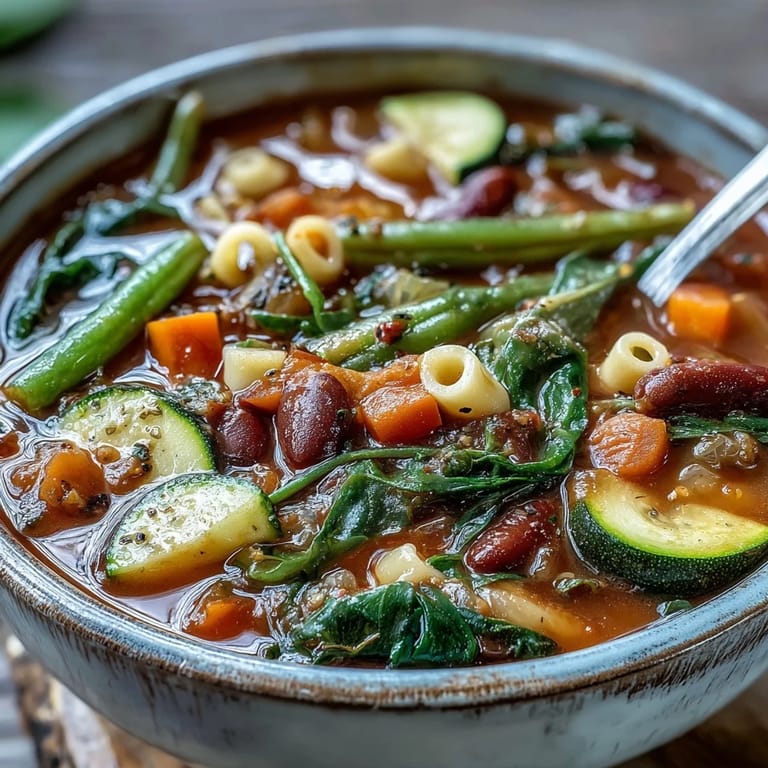
- Zucchini and green beans: Fresh vegetables matter here because they hold their shape and remind you of gardens.
- Spinach or kale: Add whichever you have; it wilts into the broth in seconds and turns the whole pot a deeper green.
- Diced tomatoes: Canned is perfectly fine and honestly better than winter tomatoes that taste like disappointment.
- Vegetable broth: This is your liquid gold; homemade is lovely but store-bought saves time and the soup will still be wonderful.
- Dried oregano, basil, and thyme: These three herbs are non-negotiable and should smell fragrant when you open their jars.
- Bay leaf: One leaf is enough; remember to fish it out at the end or warn your guests like Maria warned me.
- Cannellini and kidney beans: Two types create different textures and make the soup feel substantial without being heavy.
- Small pasta: Ditalini is traditional but honestly any small shape works; cook it separately if you're making this ahead.
- Parmesan cheese: The optional garnish that transforms a good soup into something you'll crave.
Tired of Takeout? 🥡
Get 10 meals you can make faster than delivery arrives. Seriously.
One email. No spam. Unsubscribe anytime.
Instructions
- Build your aromatic base:
- Heat the olive oil in your largest pot over medium heat and watch it shimmer before adding the onion, carrots, and celery. Let them soften for five to six minutes, stirring occasionally so nothing sticks, and listen for the gentle sizzle that tells you things are happening right.
- Deepen the flavors:
- Add the minced garlic, zucchini, and green beans, cooking for three to four more minutes until the kitchen smells like an Italian market. The vegetables should be softening but still hold their shape.
- Create the broth:
- Pour in your tomatoes with their juices, the vegetable broth, and all the dried herbs along with the bay leaf. Bring it to a boil and then let it settle into a gentle simmer covered for fifteen minutes so the herbs can share their secrets with the liquid.
- Add the heartiness:
- Finish with greens:
- Stir in the spinach or kale and watch it soften into the warm broth within two to three minutes. Taste now and adjust salt and pepper until it tastes like comfort.
 Save on Pinterest
  Save on Pinterest
 My son once asked why I made minestrone instead of opening a can, and I told him it was because soup you make by hand carries your attention in every spoonful. He asked for seconds and that was enough.
When to Make It Your Own
The real magic of minestrone is that it welcomes substitutions like an old friend who doesn't mind if you're late. Add potatoes in winter for earthiness, throw in cabbage for bite, scatter in peas in spring, or use whatever beans are in your pantry. The framework stays the same while your version becomes different each season.
Timing and Storage Wisdom
This soup actually improves after a day or two as the flavors marry and deepen, which is why it's perfect for making on a Sunday evening. Store it in the refrigerator in glass containers and it'll stay fresh for four to five days, or freeze it without the pasta and add fresh noodles when you reheat.
Serving and Pairing Ideas
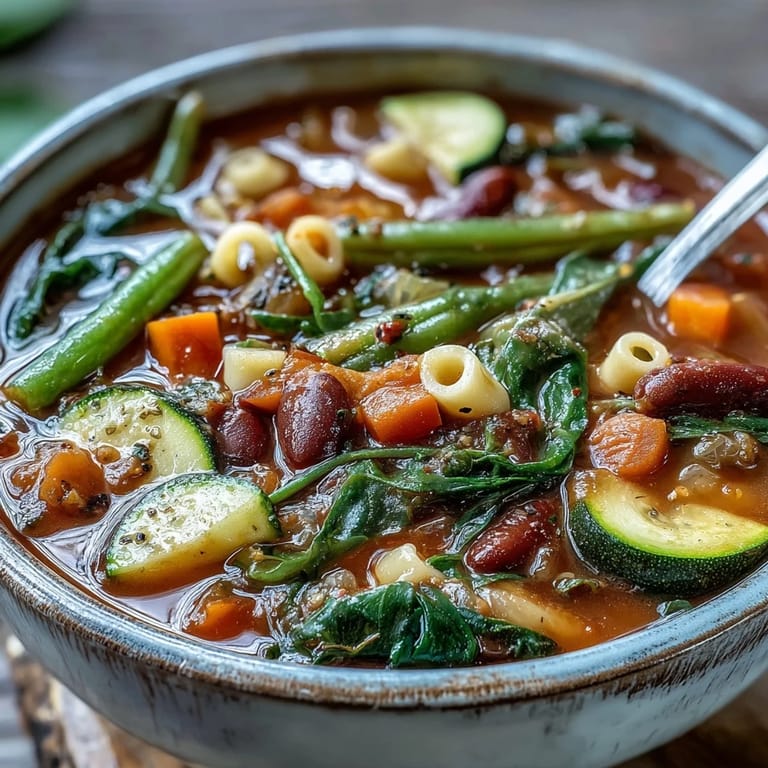
Ladle this into deep bowls while it's steaming and watch how the colors glow against white porcelain. A generous handful of fresh parsley, a shower of Parmesan, and a thin drizzle of your best olive oil turn a simple soup into something you want to linger over. Pair it with thick slices of toasted bread for dipping and maybe a glass of light red wine if the evening calls for it.
- Keep good crusty bread on hand because this soup demands something to soak up every last bit.
- Don't skip the final taste adjustment because salt and pepper are what make it sing.
- Minestrone feeds both your body and your spirit, so never rush the eating of it.
 Save on Pinterest
  Save on Pinterest
 This is the soup that proves the simplest recipes often mean the most because they make space for people and memory. Make it, share it, and let it become yours.
Recipe FAQs
- → Can I use different vegetables in minestrone?
Absolutely! Minestrone is very versatile. Try adding diced potatoes, cabbage, peas, or any seasonal vegetables you have on hand. Just adjust cooking times based on the vegetable's density.
- → What type of pasta works best?
Small pasta shapes like ditalini, elbow macaroni, or small shells work perfectly. They cook quickly and are easy to eat with a spoon. For gluten-free diets, use gluten-free pasta varieties.
- → Can I make this soup vegan?
Yes! Simply omit the Parmesan cheese garnish or use a plant-based Parmesan alternative. The soup base is already vegan-friendly when made with vegetable broth.
- → How long does minestrone keep in the refrigerator?
Store in an airtight container for up to 4-5 days. The pasta may absorb liquid over time, so add extra broth when reheating. It also freezes well for up to 3 months.
- → What can I serve with minestrone?
Crusty Italian bread, garlic bread, or focaccia are classic accompaniments. A light red wine like Chianti or a crisp white wine pairs wonderfully. A simple green salad completes the meal.
- → Can I use dried beans instead of canned?
Yes! Soak 1 cup of dried beans overnight, then cook until tender before adding to the soup. This takes longer but offers better texture and flavor control.