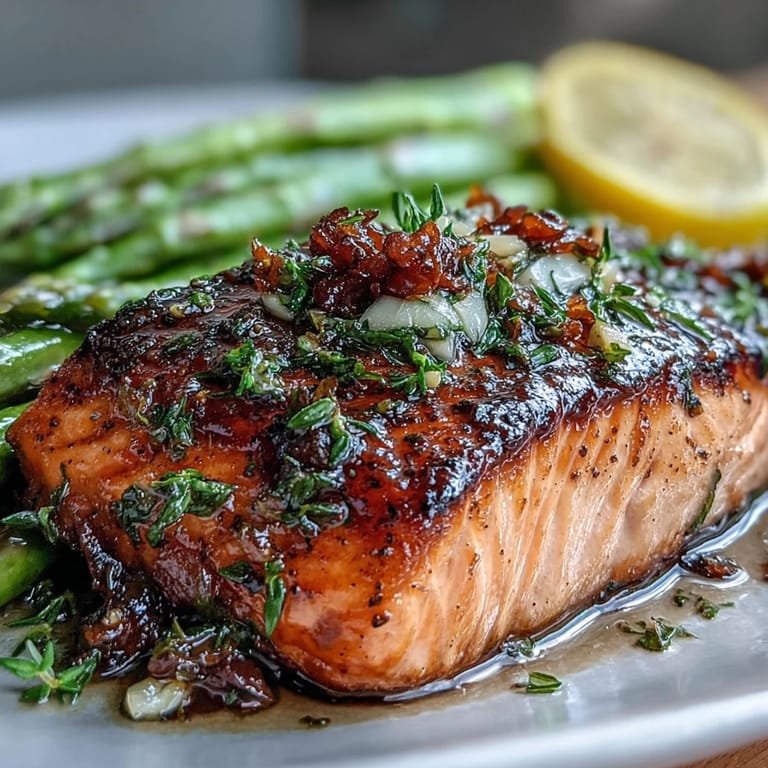
 Save on Pinterest
 I still remember the hum of early spring outside my kitchen window as I tossed asparagus onto the counter; it’s the time of year when dinner feels lighter, brighter, and full of possibility. My first attempt at garlic butter salmon came on a weeknight when I’d promised myself something quick but wasn’t willing to sacrifice flavor or elegance. The aroma of sizzling garlic immediately pushed me to linger over the stove, chasing that golden crust on the salmon with more care than usual. Sometimes, a little improvisation—a splash of white wine here or an extra squeeze of lemon there—can turn a routine recipe into a celebration of fresh ingredients. The best part is this dish delivers big rewards with surprisingly little fuss.
Cooking garlic butter salmon with asparagus for my partner after a day of errands felt like reclaiming a little luxury. There was laughter over the popping oil and a debate about who could flip the salmon without breaking the fillet. Even the cat hovered hopefully by the stove, nose twitching at the scent. It became less about time-saving and more about savoring those small rituals together. Now, I make this dish when I want dinner to feel special but effortless—especially when fresh asparagus hits its peak.
Ingredients
- Salmon fillets: Go for skin-on if you love a crisp finish, and pat them dry for the perfect golden sear.
- Asparagus: Trim the tough ends so each spear cooks evenly; thinner stalks will turn tender in just a few minutes.
- Lemon: Brightens everything, and thin slices cook gently in the butter, infusing subtle tartness.
- Unsalted butter: Offers rich flavor without overpowering; add in stages to control the sauce texture.
- Olive oil: Prevents the butter from burning and adds a hint of fruitiness to the pan.
- Garlic: Minced garlic blooms quickly in melted butter—don't skimp on the aroma factor!
- Thyme: Fresh if possible; it lends a woodsy note that pairs beautifully with fish.
- Salt and pepper: Essential for seasoning each layer of the dish—taste and adjust as you cook.
- Parsley: Sprinkle at the end for color, freshness, and easy elegance.
Tired of Takeout? 🥡
Get 10 meals you can make faster than delivery arrives. Seriously.
One email. No spam. Unsubscribe anytime.
Instructions
- Season the salmon:
- Pat fillets dry and rub salt and pepper onto both sides, watching the grains cling to the moist fish.
- Sauté asparagus:
- Add olive oil to a hot skillet, tossing asparagus until it turns vibrantly green and just fork-tender. Set aside and keep warm.
- Sear the salmon:
- Drop more oil and a pat of butter into the skillet, then lay salmon skin-side down; listen for the sizzle as it forms a golden crust. Flip gently and let the flesh cook through, basking in the buttery aroma.
- Add garlic butter and aromatics:
- Stir in minced garlic, thyme, and remaining butter; sauté until fragrant, spooning the melted goodness over the salmon. Lay in lemon slices and return asparagus to the pan, letting both vegetables soak up the sauce.
- Finish and serve:
- Remove from heat, sprinkle with parsley, and serve straight from the skillet for maximum flavor and freshness.
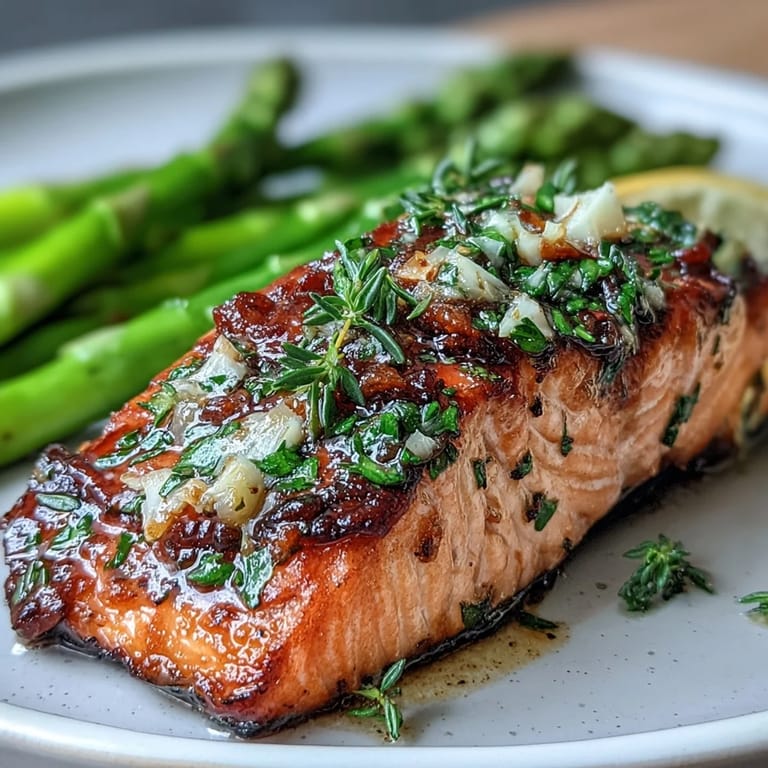 Save on Pinterest
 The first time friends dropped by unexpectedly and I whipped up this salmon, the pan became the center of the evening. Conversation circled around the kitchen, forks dipped straight into the skillet, and laughter punctuated the hunt for the juiciest asparagus spear. It’s become a dish that invites everyone to linger—taste-testing, garnish-sprinkling, and serving themselves before plates even hit the table.
Making the Most of Seasonal Asparagus
Spring asparagus is tender and sweet, and I’ve learned to leave it slightly crisp so every bite snaps. Thinner stalks cook in under four minutes, while thicker ones benefit from a quick peel or longer sauté. Whenever possible, buy local and use the same day for the best flavor.
Choosing Salmon for Best Results
Skin-on fillets keep their integrity and deliver a satisfying crunch after searing. Look for bright, moist flesh and avoid any with a fishy smell. Wild-caught salmon amps up the flavor, but any fresh fillet works beautifully in this recipe.
Finishing Touches That Make Dinner Shine
Don’t forget fresh parsley—it lifts the richness, adds color, and makes each plate feel more inviting. I also like to serve this with a crisp glass of Sauvignon Blanc or simple roasted potatoes when I want to impress. A splash of white wine in the pan amplifies the sauce’s depth for days when you want something just a little extra.
- Keep lemon slices thin so they cook through and meld into the sauce.
- Let the salmon rest for a minute before serving to lock in juices.
- Use a wide spatula—fish turner—for effortless fillet flipping.
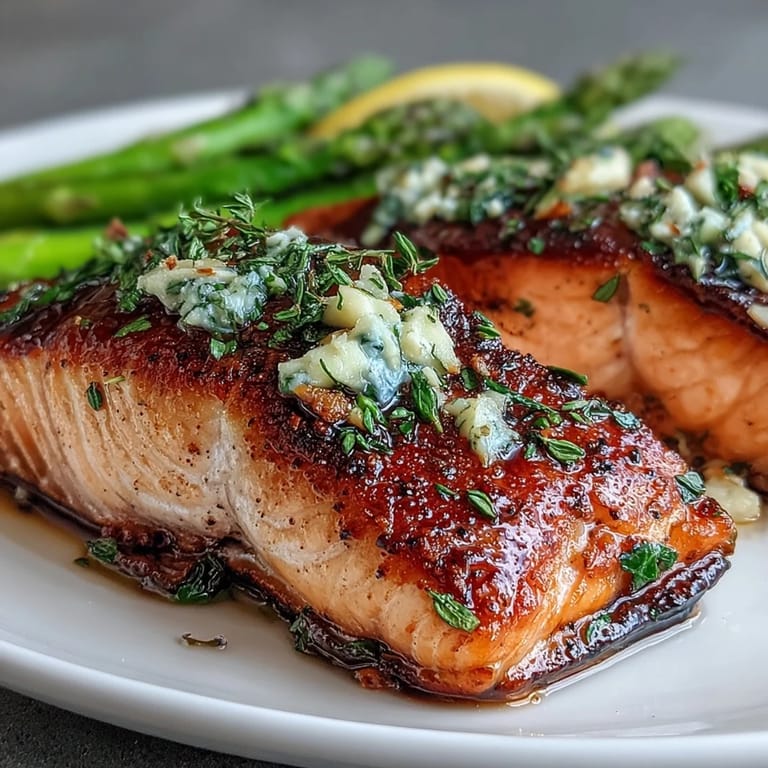 Save on Pinterest
 Sometimes dinner for four turns into dinner for two plus leftovers, and this salmon tastes just as lovely the next day. I hope you find as much joy in the simple, buttery perfection as I do—whether you’re feeding a crowd or just yourself.
Recipe FAQs
- → How do you keep salmon fillets moist?
Pat fillets dry and avoid overcooking. Cook skin-side down first for crispness and moisture; finish with butter for richness.
- → Can asparagus be substituted?
Yes, green beans or broccolini work well, offering similar texture and flavor. Adjust sauté time as needed.
- → What flavors complement this dish?
Lemon slices and fresh herbs add brightness. Garlic and thyme infuse aromatic notes that balance the buttery richness.
- → Is this meal suitable for special diets?
It's gluten-free and low in carbs. For dairy-free, use olive oil instead of butter to keep it allergen-friendly.
- → What wine pairs well with salmon and asparagus?
Crisp Sauvignon Blanc or Chardonnay enhance the flavors of salmon and asparagus, making for an elegant pairing.
- → Can the fillets be cooked without the skin?
Both skin-on and skinless fillets work; skin-on offers extra texture and protects the fish during cooking.