 Save on Pinterest
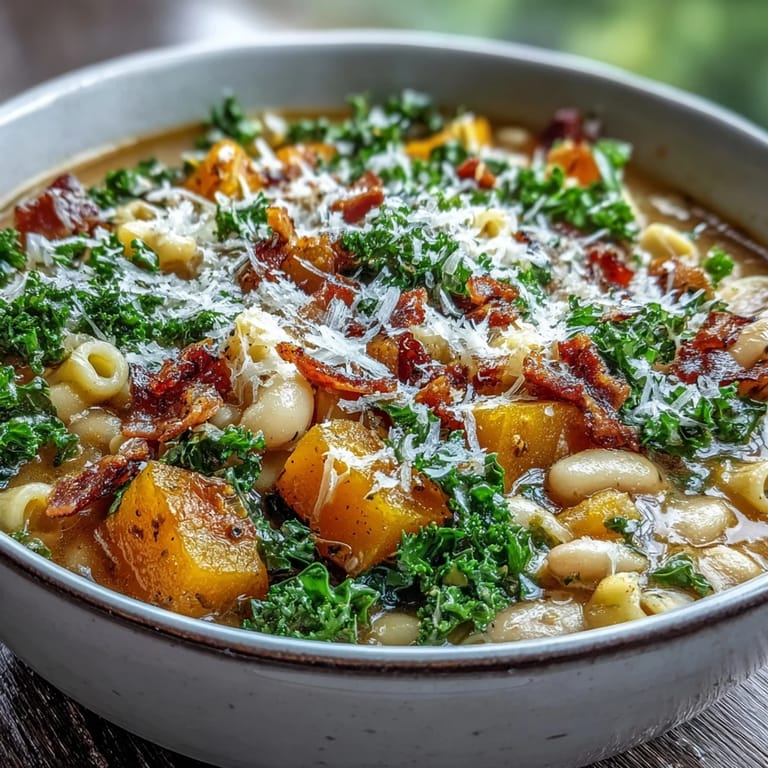
 October always smells like butternut squash in my kitchen, and this minestrone is why. I stumbled onto this recipe during a farmers market trip when I couldn't resist buying three squashes at once, then panicked about what to do with them all. A friend mentioned throwing one into her minestrone, and suddenly this soup became my go-to way to use up whatever autumn vegetables are sitting on my counter. The pancetta adds a savory backbone that makes it feel special without requiring any fancy technique.
Last November, I made this for a small dinner party when someone unexpectedly showed up hungry, and I realized I could have a proper meal on the table in less time than it took them to pour wine. That moment sold me on minestrone forever, and now it's my secret weapon when I want to feed people without stress.
Ingredients
- Pancetta, diced: The 120 grams renders into pure umami, but don't skip rendering it first or you'll miss that crispy texture and depth.
- Yellow onion: One medium onion is your flavor foundation; this is where the sweetness starts.
- Carrots and celery: These two work like a team to create the classic aromatic base that makes soup feel homemade.
- Butternut squash: Two cups peeled and cubed gives you those tender golden pieces that make this soup feel intentional and seasonal.
- Garlic: Two cloves minced means you taste it without it overpowering the delicate squash.
- Kale: Two cups roughly chopped adds heartiness and a slight bitterness that plays beautifully against sweet squash.
- Canned diced tomatoes: Use the 400-gram can with juice included, as the liquid contributes to the broth and tomato flavor.
- White beans: One drained and rinsed can gives you protein and creaminess without needing to cook dried beans.
- Ditalini pasta: This small tube shape is traditional and holds the broth well, but any small pasta works if that's what you have.
- Chicken or vegetable broth: Five cups forms your soup base, and homemade broth makes a noticeable difference if you have it.
- Fresh thyme: One teaspoon fresh leaves or half a teaspoon dried adds an earthy note that whispers autumn.
- Bay leaf: One leaf infuses the whole pot with subtle depth; don't forget to fish it out before serving.
- Black pepper and salt: Taste and adjust at the end because the pancetta and Parmesan add saltiness.
- Fresh parsley and Parmesan: These are your finishing touches that make each bowl feel a little fancier.
Tired of Takeout? 🥡
Get 10 meals you can make faster than delivery arrives. Seriously.
One email. No spam. Unsubscribe anytime.
Instructions
- Render the pancetta:
- Heat your olive oil in a large Dutch oven over medium heat, then add the diced pancetta and cook for about five minutes until the edges turn golden and crispy. Listen for the gentle sizzle and watch as the fat begins to pool; remove the pancetta with a slotted spoon and set it aside, but leave every bit of that flavorful fat in the pot.
- Build your aromatic base:
- Add your diced onion, carrots, and celery to the warm pancetta fat and sauté for five minutes, stirring occasionally until everything softens and the kitchen smells irresistible. You'll know it's ready when the onion turns translucent and you can't help but take a deep breath.
- Introduce the squash and garlic:
- Stir in your butternut squash cubes and minced garlic, cooking for just two minutes until the garlic releases its aroma and the squash begins to glisten in the fat. This brief moment lets the garlic flavor bloom without burning.
- Add your liquid and seasonings:
- Pour in the canned tomatoes with their juice, the drained white beans, and your broth, then add the thyme, bay leaf, salt, and pepper. Stir everything together and bring it to a gentle simmer.
- Simmer the squash tender:
- Cover the pot and let it cook for twenty minutes until the butternut squash is completely tender and easy to break apart with your spoon. The covered pot keeps the moisture in and lets the vegetables soften through.
- Finish with kale and pasta:
- Remove the lid, stir in your chopped kale and ditalini pasta, then simmer uncovered for eight to ten minutes until the pasta reaches al dente and the kale turns a darker green and tender. Stir occasionally so the pasta doesn't stick to the bottom.
- Taste and adjust:
- Fish out the bay leaf with a fork, then taste the soup carefully and add more salt and pepper if it needs them. Remember that the Parmesan you'll add at the table brings additional saltiness.
- Serve with care:
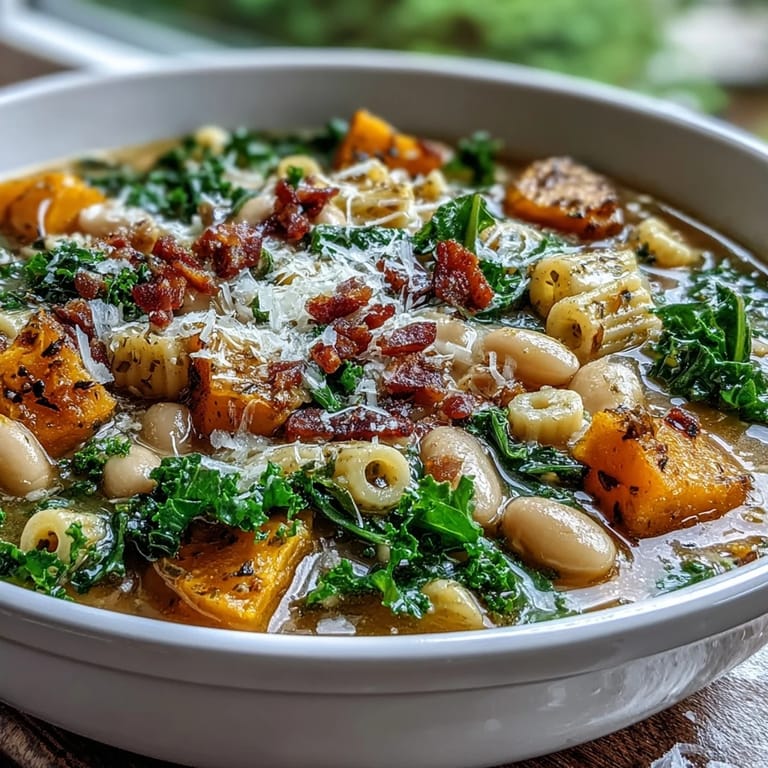
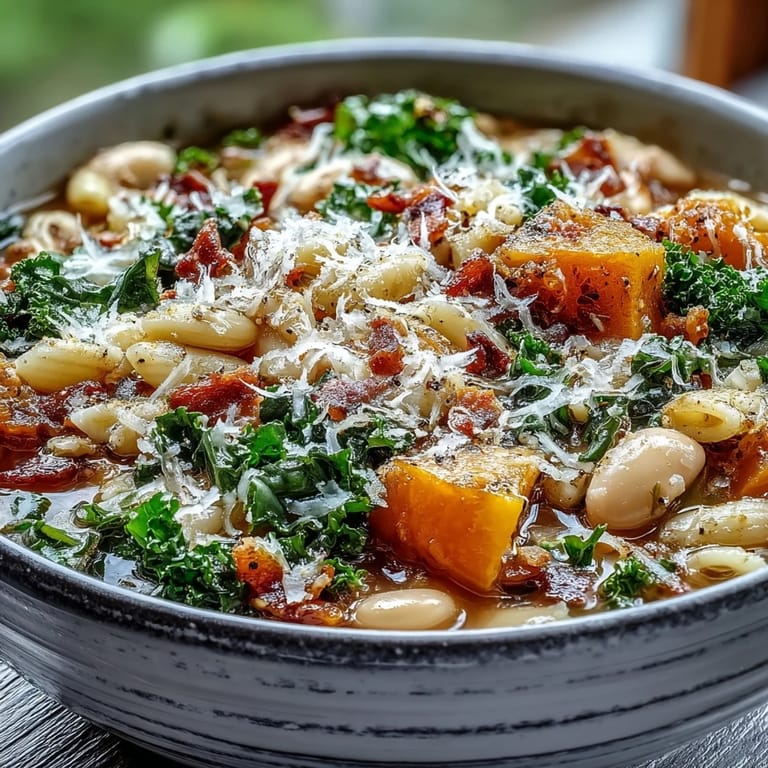
- Ladle the soup into warm bowls and top each one with some of the reserved crispy pancetta, a handful of fresh parsley if you have it, and a generous handful of Parmesan cheese.
 Save on Pinterest
  Save on Pinterest
 There's something about watching someone take their first spoonful of this soup and seeing their eyes light up when they hit a piece of squash and some pancetta at the same time. That's when I knew I'd figured out something worth making again and again.
Making It Vegetarian
Skip the pancetta entirely and use vegetable broth instead of chicken broth, then add a pinch of smoked paprika to the pot during the simmer to replace the savory depth the pork would have given you. The soup becomes lighter and lets the butternut squash shine, though you lose that crispy garnish element that makes it feel special.
Timing and Flexibility
The beauty of this minestrone is that you can adjust it based on what you're working with and how much time you have. If your squash cubes are smaller, they'll cook faster, so start checking around fifteen minutes into the simmer rather than waiting the full twenty. If you're using frozen kale instead of fresh, add it straight to the pot without thawing and give it an extra minute or two to wilt.
Serving and Storage
This soup tastes even better the next day once all the flavors have had time to become friends, so don't hesitate to make it ahead and reheat gently on the stovetop. It keeps well in the refrigerator for up to five days and also freezes beautifully if you cook the pasta just shy of al dente, then add fresh pasta when you reheat.
- Serve with crusty bread and a drizzle of good olive oil for something special.
- A light red wine like Pinot Noir pairs beautifully if you're in the mood.
- Leftovers transform into something almost creamy as the pasta continues to soften and release starch into the broth.
 Save on Pinterest
  Save on Pinterest
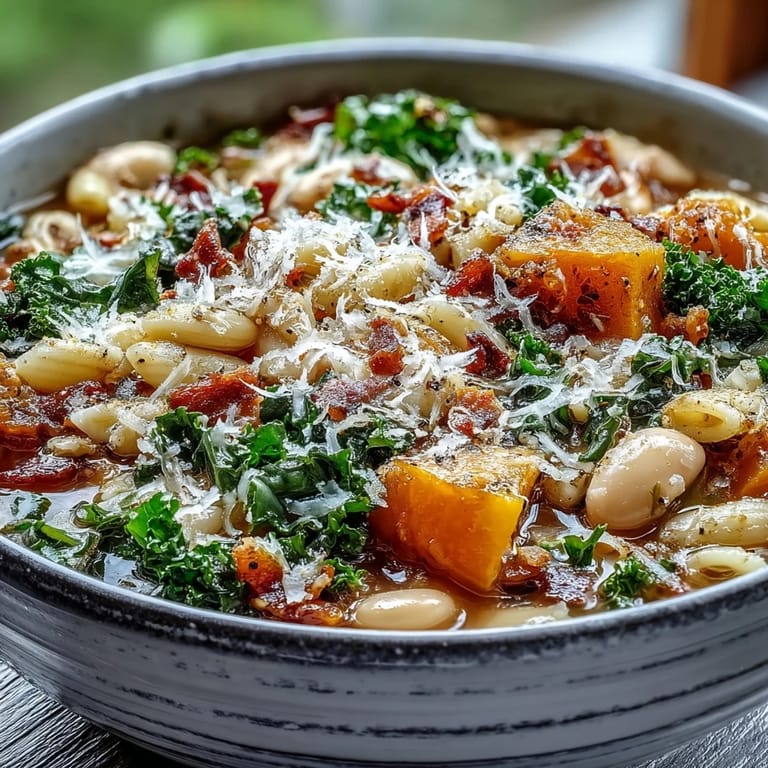
 This minestrone has become my favorite way to cook through October and November, turning simple vegetables into something that feels both comforting and alive. There's real joy in knowing you can make it again tomorrow.
Recipe FAQs
- → Can I make this minestrone vegetarian?
Yes, simply omit the pancetta and use vegetable broth instead of chicken broth. Add a pinch of smoked paprika to maintain depth of flavor and a hint of smokiness.
- → What pasta shapes work best in minestrone?
Small pasta shapes like ditalini, small shells, elbows, or tubetti work perfectly. Adjust cooking time according to your pasta package instructions to achieve al dente texture.
- → How do I store leftover minestrone?
Store in an airtight container in the refrigerator for up to 4 days. Note that pasta will absorb liquid over time, so you may need to add extra broth when reheating.
- → Can I freeze fall minestrone?
Yes, but for best results, freeze the soup before adding pasta. Cook pasta fresh when reheating. Freeze in portioned containers for up to 3 months.
- → What can I substitute for butternut squash?
Sweet potato, pumpkin, or acorn squash make excellent substitutes. Cut into similar-sized cubes to ensure even cooking within the 20-minute simmering time.
- → How can I make this gluten-free?
Use certified gluten-free pasta or omit pasta entirely and add extra white beans or chickpeas for heartiness. Always check broth and other packaged ingredients for gluten.