 Save on Pinterest
 There's something almost magical about watching egg whites transform into clouds. Years ago, my grandmother handed me a whisk and said, 'Don't let anyone tell you baking is just chemistry—it's patience and respect for what you're making.' Angel food cake became the dish that proved her right. That first time, I watched in disbelief as twelve humble egg whites became something that could actually hold up a cake. Now, every time I make it, I'm that nervous kid in her kitchen again, holding my breath as the oven does its work.
I made this cake the summer my sister came home from college, and she took one bite and closed her eyes like she'd traveled somewhere. We sat on the back porch with berries and whipped cream, and she didn't say much, just kept eating. That's when I understood that the best recipes aren't the complicated ones—they're the ones that make people stop talking and start feeling.
Ingredients
- Cake flour (1 cup, sifted): This is non-negotiable; regular flour is too heavy and will betray you, turning your clouds into something dense and ordinary.
- Granulated sugar (1½ cups total, divided): You're building a meringue here, so the sugar that goes in later matters more than you'd think—it stabilizes everything.
- Fine salt (¼ teaspoon): A whisper of salt makes the vanilla sing and keeps the egg whites from tasting flat.
- Large egg whites (12, at room temperature): Room temperature is the difference between stiff peaks and sad, broken foam—I learned this the hard way.
- Cream of tartar (1½ teaspoons): This powder is your secret weapon; it stabilizes the egg whites so they don't weep or collapse as they bake.
- Pure vanilla extract (1 teaspoon): Use the real thing; artificial vanilla tastes thin and metallic against something this delicate.
- Almond extract (½ teaspoon, optional): If you add this, go easy—it whispers rather than shouts, which is exactly what this cake needs.
Tired of Takeout? 🥡
Get 10 meals you can make faster than delivery arrives. Seriously.
One email. No spam. Unsubscribe anytime.
Instructions
- Set your stage:
- Preheat the oven to 350°F and find your ungreased tube pan—the grease is your enemy here because the batter needs something to grip as it climbs. Make sure your pan is spotless and dry, because even a hint of grease will sabotage the rise.
- Triple-sift the dry ingredients:
- Combine cake flour, ¾ cup sugar, and salt in a bowl and sift three times into a clean bowl. This isn't fussy—each pass aerates the flour and ensures there are no lumps hiding to ruin your texture.
- Begin the meringue:
- Pour your room-temperature egg whites into a large bowl (or stand mixer, which makes this easier) and beat on medium-high speed until they're foamy and loosening up. Once they're foamy, sprinkle in the cream of tartar and keep beating.
- Build the peaks:
- Gradually add the remaining ¾ cup sugar in slow, steady increments while beating continuously. Watch for soft peaks first—they'll look like clouds that fall over themselves—then keep going until the peaks stand at full attention and the mixture turns glossy and thick. This takes patience, but it's where the magic lives.
- Add the flavoring:
- When you reach stiff peaks, gently fold in the vanilla and almond extract with just a few turns of a spatula—overworking now will deflate everything you've built.
- Fold in the flour:
- Sift the flour mixture over the egg whites in three batches, folding gently with a spatula after each addition until just barely combined. Use a light hand here; you're trying to keep as much air as possible trapped in the foam.
- Pour and smooth:
- Spoon the batter into your ungreased pan and smooth the top gently with a spatula. Take a thin knife and run it through the batter once or twice to break up any large air pockets that could create tunnels when it bakes.
- Bake until golden:
- Bake for 35 to 40 minutes, until the top is golden and the cake bounces back immediately when you touch it gently. The cake will smell sweet and vanilla-forward, and the kitchen will smell like possibility.
- Invert immediately:
- Here's the crucial part: pull the cake out and immediately flip the entire pan upside down onto a bottle neck or wire rack. This prevents the cake from sinking as it cools, keeping it tall and light.
- Cool completely inverted:
- Let the cake hang there upside down for at least an hour, preferably two, while it cools to room temperature. Resist the urge to peek—patience here is rewarded with texture.
- Release and serve:
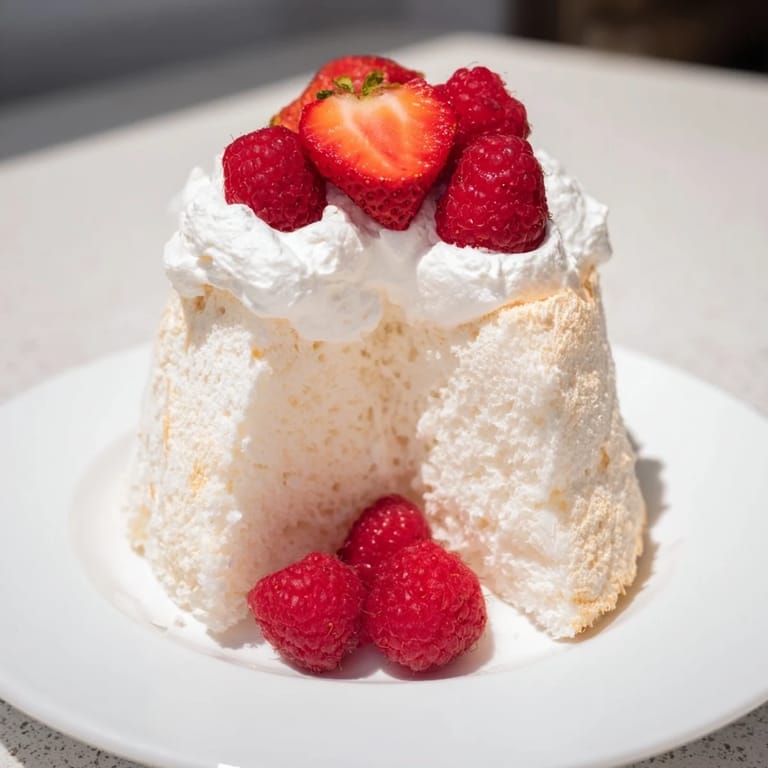
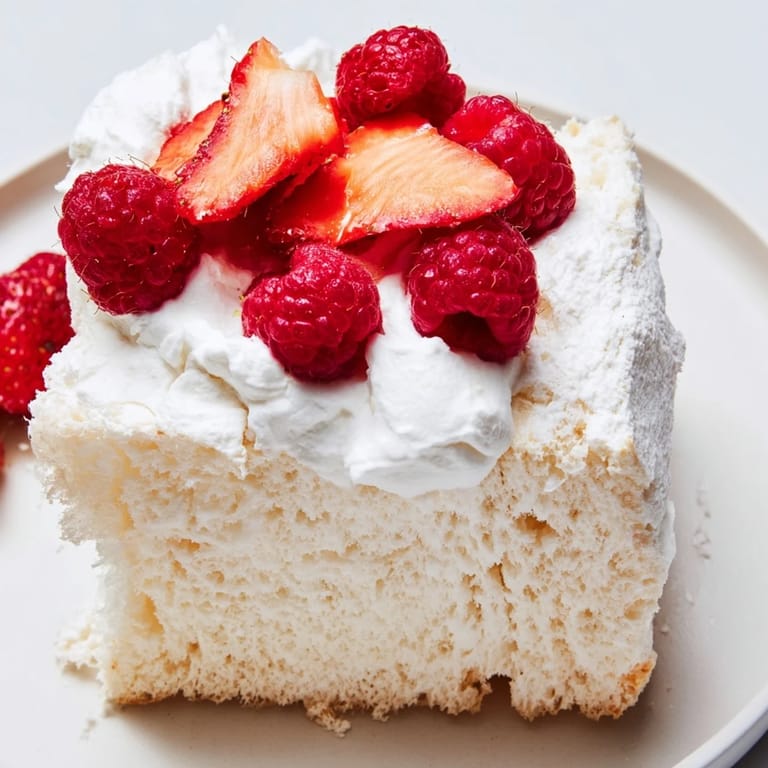
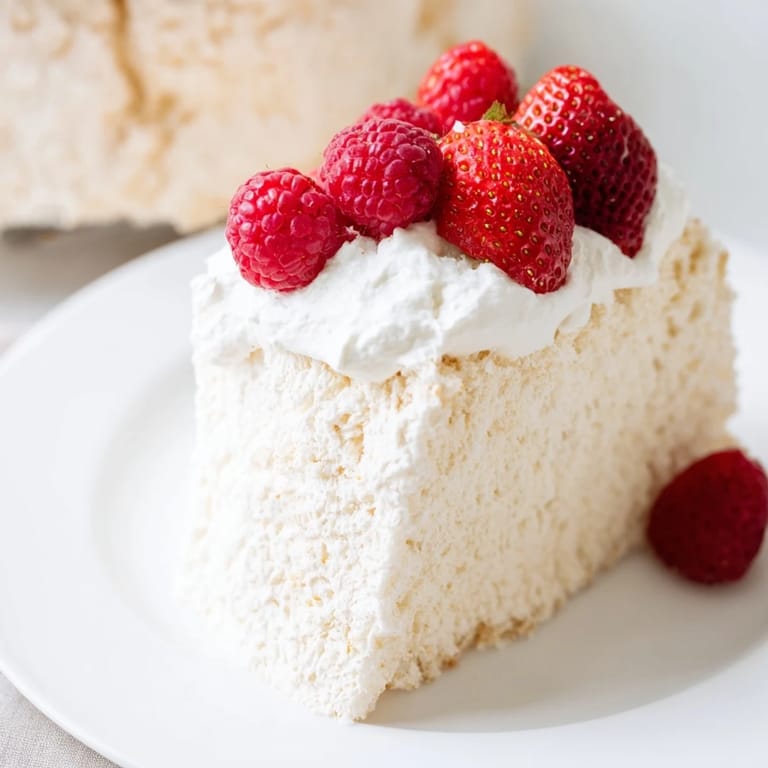
- Once cool, slide a thin knife around the inside edge of the pan and run it around the tube in the center, then turn the pan right-side up and turn out the cake onto a serving plate. Serve plain, or dress it with fresh berries and a cloud of whipped cream.
 Save on Pinterest
 My neighbor tasted this cake at a Christmas potluck and asked for the recipe, then came back two weeks later to say she'd made it three times because her kids actually requested it for dessert instead of demanding chocolate. That moment told me everything: this isn't flashy, but it's real, and sometimes real is what people are actually hungry for.
The Quiet Science Behind the Rise
Angel food cake is a study in physics masquerading as dessert. The cream of tartar lowers the pH of the egg whites, which helps them trap and hold air longer—it's why your meringue stays stable instead of weeping liquid. The repeated sifting of flour isn't theater; it's aeration, breaking up density before it even gets a chance to settle. Every step builds on the last, and skipping ahead or rushing through costs you height and lightness. Understanding this doesn't make you a scientist—it makes you a baker who knows why the rules exist.
Why This Cake Deserves a Second Look
Angel food cake got overshadowed by richer, fancier desserts, but there's something timeless about it that modern baking keeps trying to recreate. It's delicate without being fragile, sweet without being cloying, and it actually tastes like the ingredients that go into it. Serve it with fresh raspberries and a whisper of whipped cream, or pair it with a bright berry compote for something more substantial. The cake is the canvas, and what you put alongside it tells the story.
Variations and Flourishes to Make It Yours
This recipe is a foundation that welcomes gentle additions. A half-teaspoon of lemon zest stirred into the vanilla transforms it into something bright and summery, while an almond extract boost makes it feel almost like a delicate pound cake's airy cousin. Some bakers fold a handful of finely crushed pistachios into the meringue just before pouring, which adds a subtle nuttiness that surprises on the second bite.
- Try a dusting of powdered sugar mixed with freeze-dried berries for a delicate sweet-tart finish.
- Serve with a simple passion fruit or blackberry coulis instead of plain whipped cream for an elegant touch.
- Make it twice in one week to understand the rhythm and build real confidence with the technique.
 Save on Pinterest
 There's wisdom in simplicity, and this cake teaches it every time you make it. It asks only for patience, clean equipment, and respect for the ingredients—and in return, it gives you something light enough to feel like air but substantial enough to matter.
Recipe FAQs
- → What makes this cake light and airy?
Whipping egg whites to stiff peaks incorporates air, creating the cake's characteristic light texture without added fat.
- → Why is the pan ungreased?
An ungreased tube pan allows the batter to cling and climb the sides, helping the cake rise properly and maintain structure.
- → How important is room-temperature egg whites?
Using room-temperature whites improves volume and whipping consistency, leading to a fluffier texture.
- → Can I add flavors or zest?
Yes, vanilla and almond extracts enhance aroma, and lemon zest adds a citrusy brightness.
- → How should the cake be cooled?
Invert the pan immediately after baking to cool; this prevents collapse and preserves the airy structure.