 Save on Pinterest
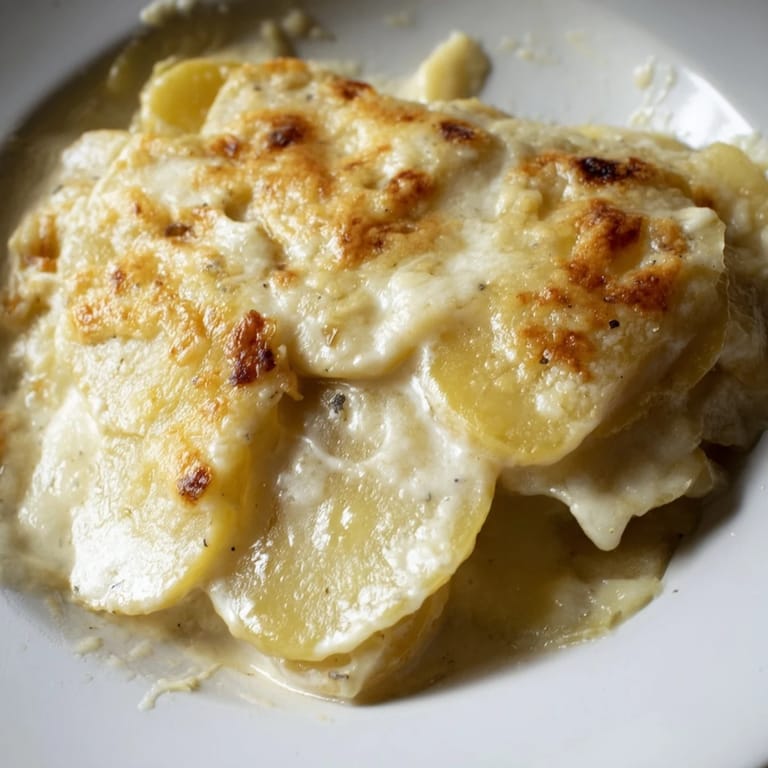
 There's something about the smell of garlic hitting hot butter that makes you slow down. I discovered au gratin potatoes not in a fancy restaurant but in my uncle's kitchen on a cold November afternoon, watching him layer thin slices of potato with cream so rich it barely poured. He never consulted a recipe, just moved with the kind of certainty that comes from making something a hundred times, and when that golden crust emerged from the oven, I understood why.
I made this for a dinner party where everything else went wrong—the roast was late, the salad wilted—but the au gratin came out of the oven at exactly the right moment, bubbling and golden, and somehow saved the entire evening. My friend Sarah went back for thirds and asked for the recipe the next day, which was when I realized this dish had quiet power.
Ingredients
- Yukon Gold or Russet potatoes, thinly sliced: Yukon Golds have a buttery flavor and waxy texture that holds up beautifully when baked, while Russets are starchier and create a fluffier result—pick based on whether you want creamy or light.
- Unsalted butter: Lets the garlic and cream shine without competing flavors, and gives you control over salt levels.
- Heavy cream: The backbone of the dish; don't skimp on quality here because you'll taste the difference in every bite.
- Gruyère cheese: Nutty and complex, it melts smoothly and browns beautifully, creating that golden crust.
- Parmesan cheese: Adds sharpness and helps the top crisp up faster than Gruyère alone could manage.
- Garlic, minced: Infused into the butter before the cream goes in so it releases its sweetness without burning.
- Salt, pepper, and nutmeg: A tiny whisper of nutmeg in cream dishes is the secret that makes people ask what the mystery flavor is.
Tired of Takeout? 🥡
Get 10 meals you can make faster than delivery arrives. Seriously.
One email. No spam. Unsubscribe anytime.
Instructions
- Heat your oven and prepare the dish:
- Preheat to 190°C (375°F) and generously butter a 23×33 cm baking dish so the edges don't stick. This step matters more than it seems.
- Create the garlic butter base:
- Melt butter over medium heat, add minced garlic, and listen for it to become fragrant—about one minute, no longer, or it tastes bitter. This is where the magic begins.
- Build the cream sauce:
- Stir in heavy cream, salt, pepper, and nutmeg, then heat until small bubbles form at the edges. Remove it from heat immediately; you're not cooking the cream, just warming it through.
- Layer the first half:
- Arrange half your potato slices in the baking dish, pour half the cream mixture over them, then sprinkle half the Gruyère and Parmesan. Don't be stingy with the cheese.
- Add the final layer:
- Repeat with remaining potatoes, cream, and cheese, making sure the top layer gets plenty of cheese because that's where the crust forms.
- Bake covered, then uncovered:
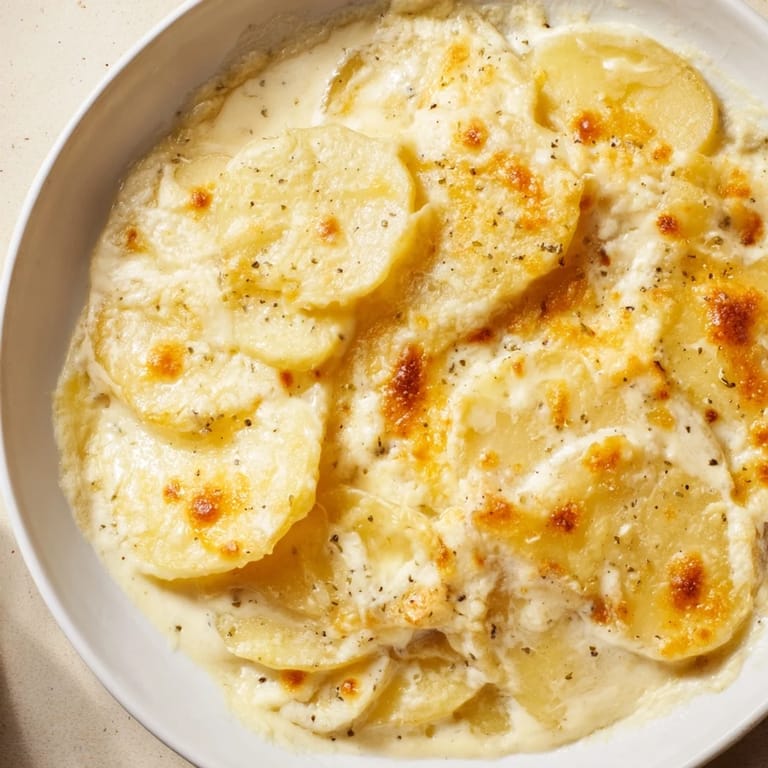
- Cover with foil and bake for 40 minutes so the potatoes steam gently. Remove the foil and bake another 20 minutes until the top is deep golden and the potatoes are fork-tender.
- Rest before serving:
- Let it sit for 10 minutes after coming out of the oven; this isn't just tradition, it's the moment flavors settle and the dish becomes easier to portion.
 Save on Pinterest
 The moment I understood au gratin potatoes wasn't when I first tasted them, but when my partner took a bite and closed their eyes, and for once didn't say anything at all. That's when food stops being a recipe and becomes a memory.
Cheese Selection Matters More Than You Think
Gruyère is the classic choice because it has a slightly sweet, nutty depth that complements potatoes without overwhelming them, but it's not your only option. I've made this with sharp cheddar when Gruyère was too expensive, and while the flavor profile shifted toward something brighter and more assertive, it was still delicious. Emmental works beautifully too, offering a milder flavor and excellent melting properties. The key is choosing a cheese that melts smoothly and browns rather than burns—avoid fresh mozzarella or feta, which don't behave the same way under heat.
Timing and Temperature Are Your Guides
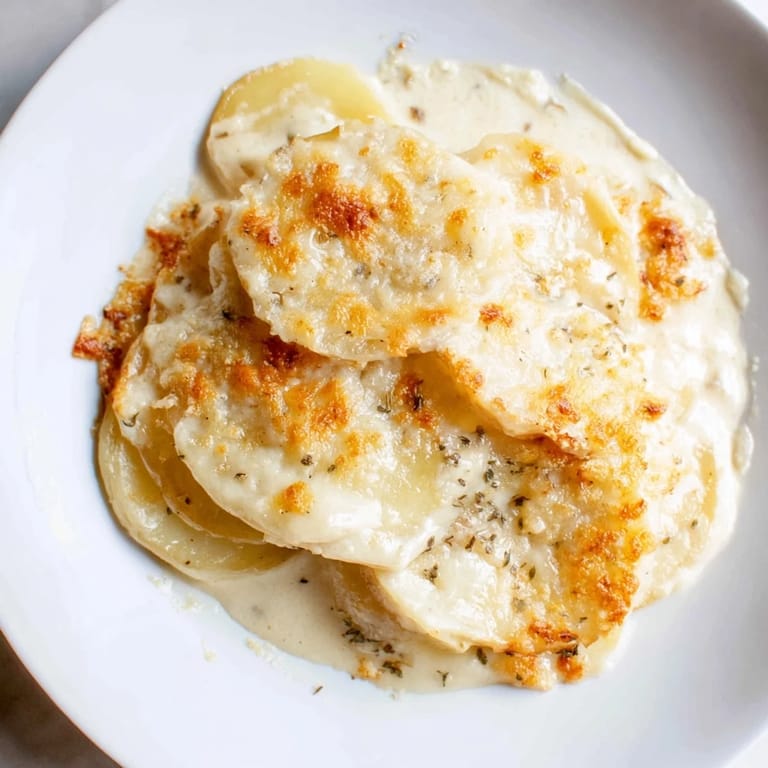
I learned the hard way that au gratin potatoes don't respond well to rushed baking. If your oven runs hot, start checking at 50 minutes instead of waiting the full 60. The visual cue—a deep golden crust with cream just beginning to bubble at the edges—matters more than the clock. Undercooked potatoes taste starchy and raw, while overcooked ones become mushy, so pay attention to that final 10 minutes when the foil comes off.
Make-Ahead and Serving Ideas
This dish is a dinner party gift because you can assemble it completely a few hours ahead, cover it with plastic wrap instead of foil, and pop it in the oven whenever you're ready. I've also made half batches in smaller dishes for weeknight dinners with no issue. It pairs beautifully alongside roasted chicken or beef, but it's rich enough to be a vegetarian main course with a sharp green salad on the side to cut through the cream.
- For extra flavor, scatter fresh thyme leaves between the potato layers before adding cream.
- A tiny pinch of cayenne pepper adds warmth without heat, if you like subtle spice.
- Leftovers reheat gently in a 160°C oven, covered, until warmed through—never the microwave, which makes the texture weird.
 Save on Pinterest
 Au gratin potatoes have a way of turning an ordinary dinner into something worth remembering. Make this dish once and it becomes part of your repertoire forever.
Recipe FAQs
- → What type of potatoes work best for this dish?
Yukon Gold or Russet potatoes are ideal as they hold shape well and absorb flavors nicely when sliced thin.
- → Can I substitute the cheeses used?
Gruyère can be replaced with sharp cheddar or Emmental to adjust flavor while maintaining the creamy, cheesy texture.
- → How do I achieve the golden crust on top?
Baking uncovered for the last 20 minutes allows the cheeses and cream to bubble and brown into a golden crust.
- → Is it necessary to let the dish rest before serving?
Yes, resting for 10 minutes helps the layers set and makes serving easier without disturbing the creamy texture.
- → Can I add herbs for extra flavor?
Adding fresh thyme between the potato layers adds a subtle aromatic note enhancing the overall taste profile.